


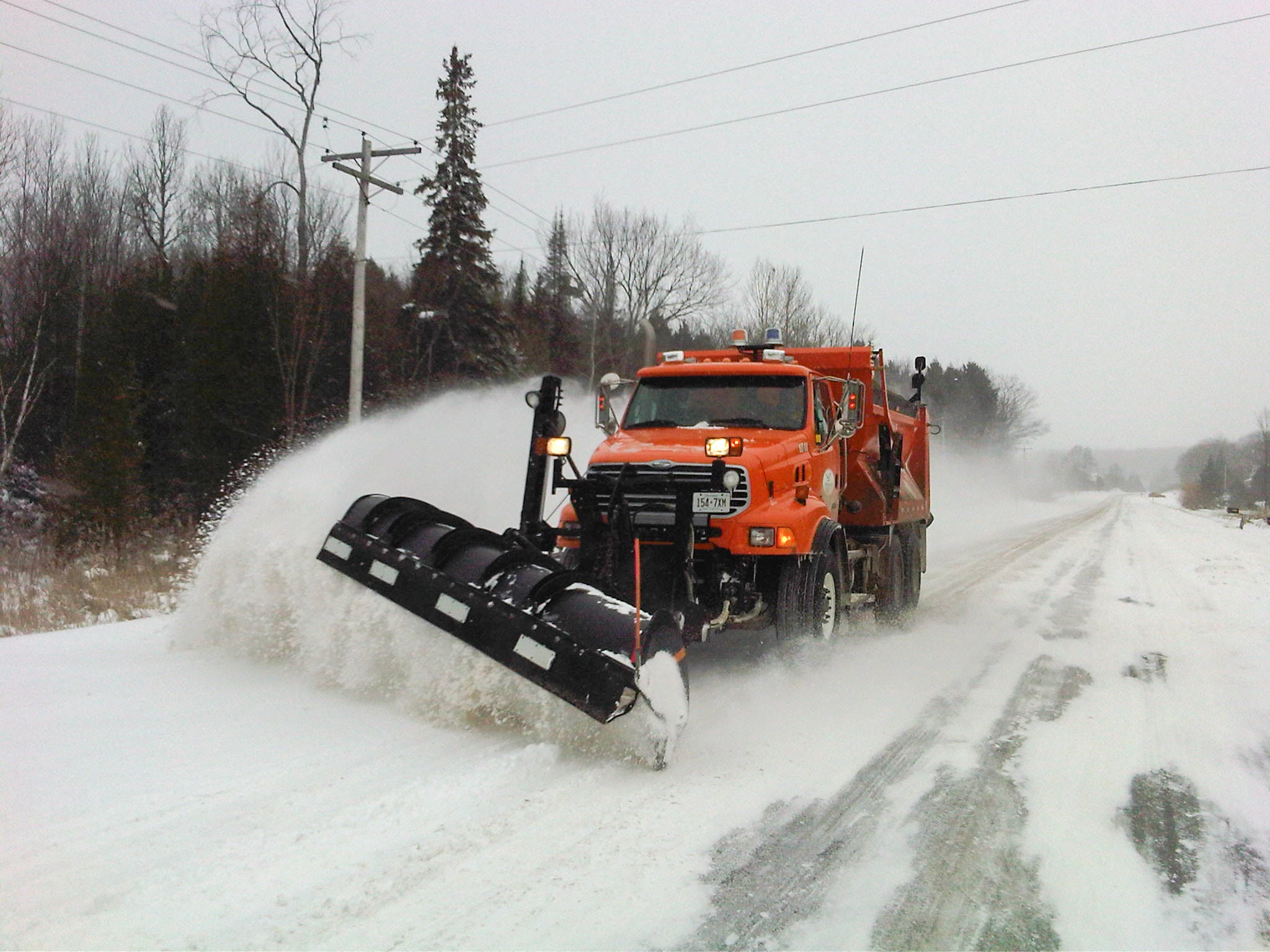
Trent Hills is coping with the provincewide shortage of road salt, but is hoping spring comes soon, says Neil Allanson, Manager of Roads and Urban Services.
The municipality has had to reduce its salt use and switch to sand/salt mixtures in some areas, Allanson said.
The municipality has contracts with two salt suppliers, he explained. “Trent Hills uses a treated salt for urban areas and rock salt/sand mix for the rural roads.”
But one usual supplier has no treated salt or rock salt available, he said. “Trent Hills still has one supplier that we have been receiving rock salt for our sand/salt mixture for rural areas and some treated salt, but we have implemented mitigation measures such as adjusting application rates and the use of sand/salt mixtures in the urban centres, instead of straight salt.”
In addition, Allanson said, “We have also used our graders on some of the gravel roads for ice blading to help remove the ice buildup and save on the salt/sand mixture.”
Last week, Northumberland County said its salt supplies are limited because the producers haven’t been able to keep up with the demand caused by early and continuing winter weather.
“With this region having already recorded nearly twice as many winter weather events as this time last year, there has been added pressure on winter maintenance operations,” it said in a news release.
“Treated salt is highly effective in colder temperatures and allows us to use less material while achieving better results,” said Denise Marshall, Director of Public Works. “Due to the high number of winter weather events this season, our contracted supply of treated salt has been used more quickly than anticipated.
“We continue to receive salt, but ongoing supply uncertainty across the province means we need to carefully manage how and when materials are applied.”
The county has also reduced application rates and switched to sand/salt mixtures instead of straight salt, Marshall said.
Northumberland County maintains approximately 900 lane-kilometres of roadway using a fleet of 27 pieces of winter maintenance equipment. Trent Hills has 1,074 lane-kilometres of road to maintain in the winter, plus approximately 44 kilometres of sidewalk and parking lots. (A lane-kilometre is one kilometre of single-lane roadway. It’s the unit used by road maintenance operations.)
You can read all Trent Hills News stories on my website here.
Does this have environmental benefits? I can't imagine it is great to have all of that salt seeping into the soil and running into the waterways.