


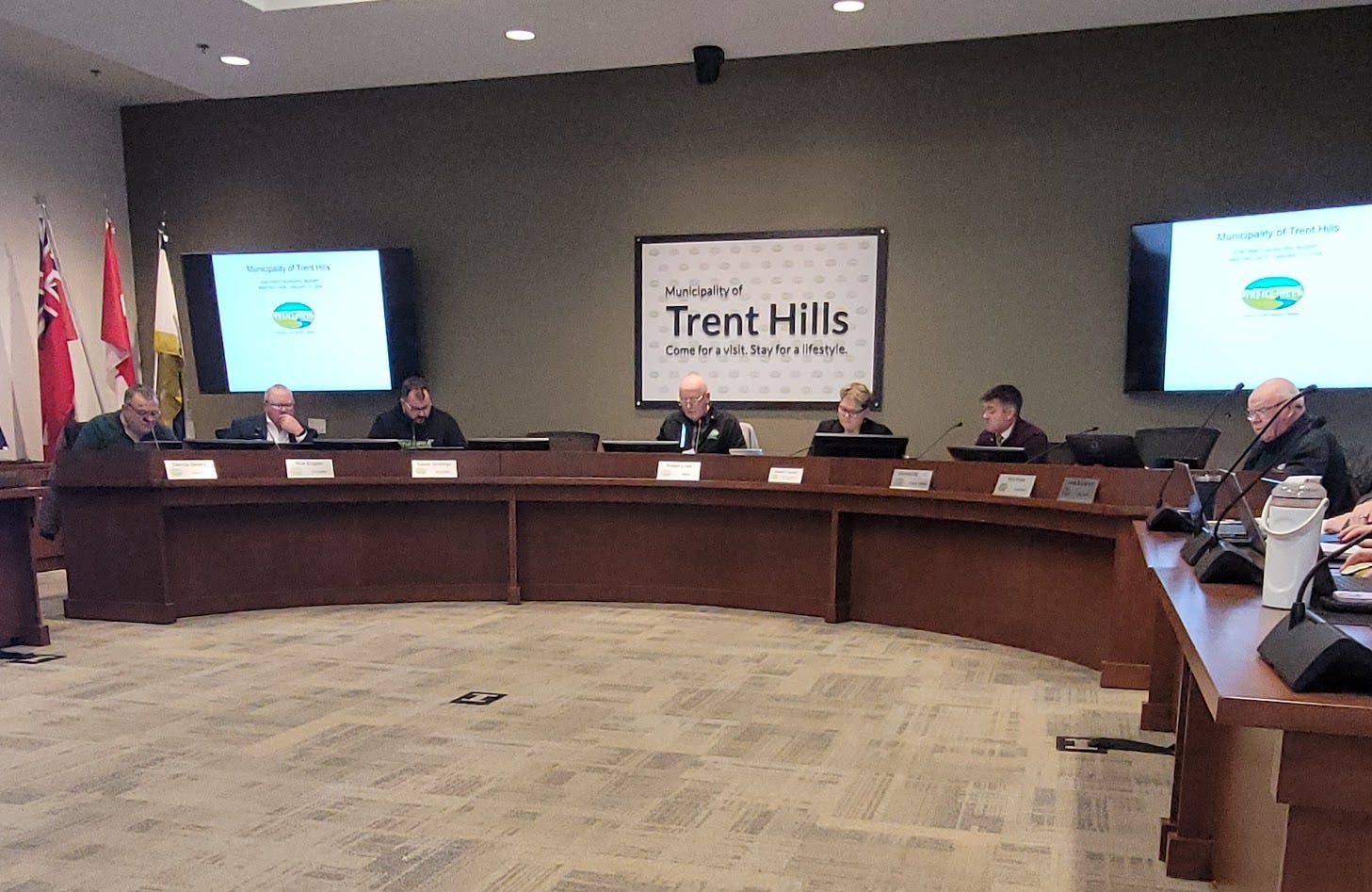
Trent Hills council has approved a 2026 budget that increases municipal taxes by 4.1 per cent or $37.89 for every $100,000 of assessment.
This means the average home assessed at $250,000 will see the municipal portion of their taxes rise $94.72. The county’s portion of our bills will go up 3.77 per cent.
Councillors said they felt the budget balanced a need to maintain services with the need to keep costs down.
The 4.1 per cent increase is down from the 4.6 per cent that was in the draft budget because council agreed to take an extra $93,000 from reserves to help pay the rising cost of Ontario Provincial Police services.
“This is not sustainable,” said Deputy Mayor Mike Metcalf. “We can all see that.”
OPP costs have jumped because the province reached a new contract with the officers two years ago and wages represent more than 80 per cent of the police costs. Metcalf noted that several hundred municipalities have been hit by this increase and they need to meet with the province to find out how to get costs under control.
Even though the municipality’s spending on police has increased, the province has protected if and others from paying the full cost for the past two years. Left unsaid was the fact that this is the final year of the OPP contract, so another set of increases is likely on the horizon.
The current budget puts no money aside for the new hospital, but councillors mentioned they recognize the need to act on that this year.
Kyle Beacock, manager of water and wastewater services, told council there is currently no estimate for the cost of extending those services about 200 metres to the site of the hospital.
Mayor Bob Crate said the council will be meeting with the hospital’s board in coming weeks and will start moving ahead on determining those costs and how much money it will contribute to the community fundraising.
“We don’t have to wait for the next budget,” said Councillor Dennis Savery. “We can introduce a levy during the year for the hospital.”
Savery asked whether the province will help pay the cost of extending services to the hospital site.
“We can ask,” Crate replied. “But I’d be surprised if they step forward.”
Total expenditures by the municipality in 2026 are $30.3 million, up 10 per cent from $27.5 million last year. Tax revenue will generate $18.3 million with the remainder from fees, grants, and reserves. The tax portion is up 5.9 per cent but an increase in taxable assessment of 1.5 per cent means the cost for average households is not the full 5.9.
Council also approved the water and wastewater budgets for 2026. Those costs are paid by users, not property taxes. The water budget is $3 million and wastewater is $6.3 million.
Residential customers who use 10,000 cubic metres of water, which is the average, will see their monthly costs rise $2.64 from $47.79 to $50.43. Average wastewater costs will rise 70 cents per month to $79.80 from $790.10.
Councillor Rick English said he was pleased that a few residents sent in comments about the draft budget and suggested changes.
“It’s clear some people spent a lot of time looking at the budgets,” he said.
Among the suggestions was deferring purchase of new vehicles or delaying replacing aging decorative streetlights. English and other councillors said deferring such spending simply puts off necessary expenditures.
Councillor Gene Brahaney said a recent barn fire that hit a farm that had been his grandfather’s demonstrated the need to spend on updated equipment. Firefighters used their aerial truck and most every other piece of equipment to prevent the fire from spreading to a nearby house and other farm buildings, including one filled with hay. All cattle were safely removed from the building.
“Some siding on the house melted, but that’s all,” said Fire Chief Shawn Jamieson.
About 40 loads of water were hauled from the town supply to extinguish the blaze.
You can read all Trent Hills News stories on my website here.
I took note that the councillors comments were basically we have to have this increased in taxes so that they don’t fall behind. There is still a lot of things that could be cut out of the budget. One of the questions that I submitted was in regards to the use of water by the Marina and the chamber in the renting of boat slips. There should be money coming back to the utility customers. Yes or No. I would hope it is not a freebie. There is no comments on looking for savings. There will not only be a big expense to the installation of utilities from the end of the line to the new hospital but how about the sewage line from there to the treatment plant. As far as the two hundred metres, the new water manager Kyle did a great job of doing the infrastructure so far on Tanner Sub division. I guess the ballot box in October will tell if they and the administration are doing a good job. Thanks Art for the good reporting.